
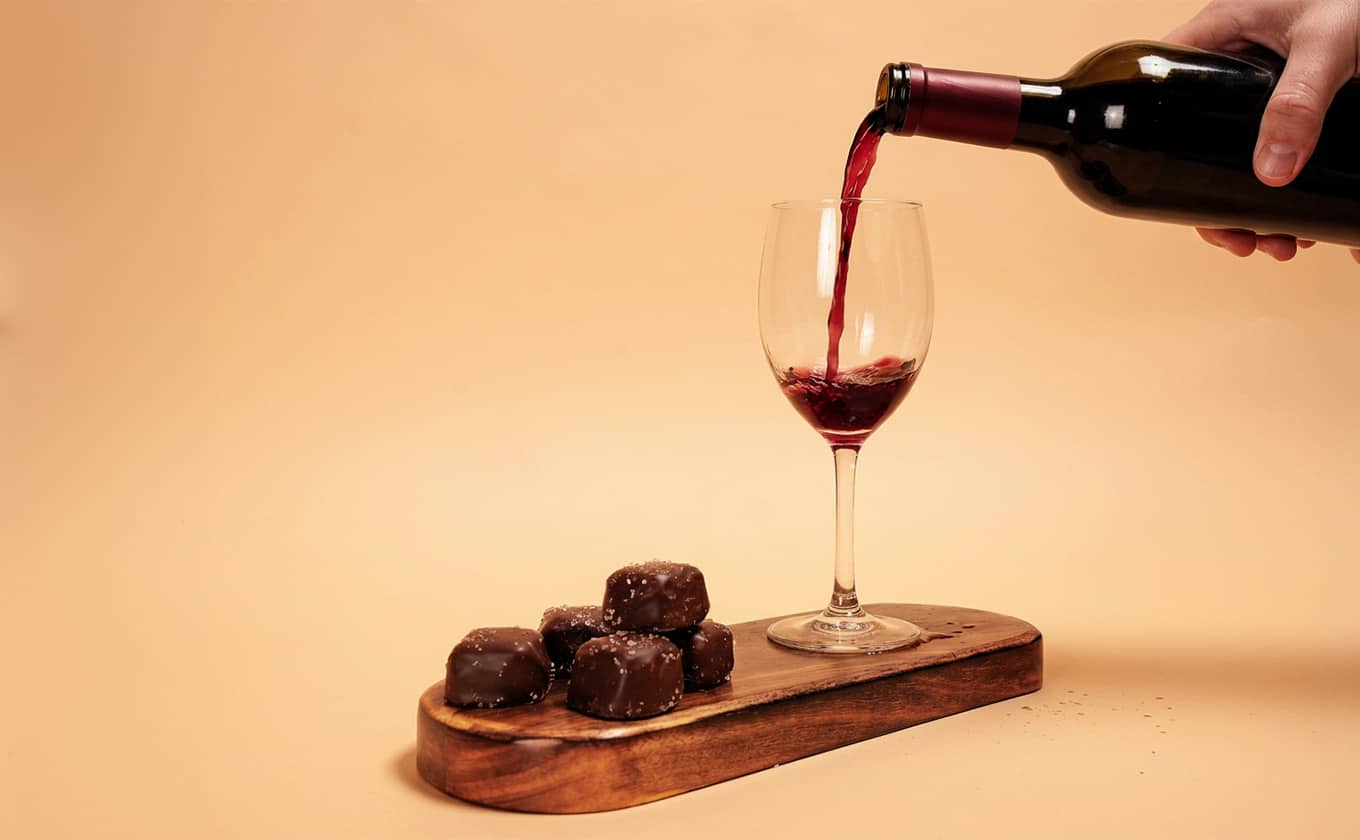
Chocolate and wine are both indulgent on their own, but together they can create a pairing that feels layered, balanced, and elegant. The trick is to understand how sweetness, texture, acidity, and body interact so you can find combinations that won’t clash.
You don’t need to be a sommelier, of course, to learn how to pair wine with chocolate. A few basic principles can help you make good matches: sweeter chocolates usually pair best with wines that have enough sweetness or fruit to hold their own, and richer chocolates can stand up to fuller-bodied reds and fortified wines.
Get to know the basic principles behind chocolate and wine pairing, plus some classic combinations that are always worth pouring another glass for.
A Simple Rule: Wine as Sweet as the Chocolate
One of the most widely accepted guidelines for pairing wine with chocolate is simple: Your wine should be at least as sweet as the chocolate you’re eating. If the wine is noticeably drier than the chocolate, it can suddenly taste bitter, sour, or overly acidic, even if it’s a wine you normally enjoy.1
That doesn’t mean every pairing has to involve dessert wine. Plenty of fruit-forward reds have enough ripe fruit character to complement milk chocolate, and richer reds have the body to stand alongside dark chocolate. You just need to prioritize balancing intensity so the wine doesn’t overwhelm the chocolate, and vice versa.
Another helpful tip is to think about progression if you’re tasting multiple chocolates. Start with lighter chocolates and lighter wines before working toward darker chocolates and sweeter or fuller-bodied wines. As your palate becomes coated with sugar and cocoa, delicate wines do become harder to appreciate.1
Pair Milk Chocolate with Fruity Reds or Aromatic Whites
Milk chocolate is one of the easiest chocolates to pair because its creamy texture and moderate sweetness leave plenty of room for different wine styles.
Fruit-forward reds with softer tannins, like Pinot Noir or Merlot, complement milk chocolate very nicely. Their cherry, raspberry, plum, and berry notes naturally enhance the sweetness of the chocolate without introducing the bitterness that highly tannic wines sometimes create.2
If white wine is more your style, think about trying sweeter selections from time to time. Riesling and Gewürztraminer offer floral aromas and vibrant fruit flavors that play nicely with creamy milk chocolate. Even dessert wines like Moscato or Port can create an indulgent finish after dinner.2
Milk chocolate can be found in some of Asher’s classic treats:
- Assorted Chocolate Covered Pretzels
- Milk Chocolate Covered Graham Crackers
- Traditional Milk Chocolate Nonpareils
These familiar flavors make excellent starting points for anyone testing out wine pairings for the first time.
Rich Dark Chocolate Calls for Bigger Wines
As cocoa percentages increase, so does chocolate’s bitterness and intensity. Dark chocolate really needs a wine with enough structure and concentration to keep up.
Cabernet Sauvignon is still a classic choice because its bold dark fruit flavors, firm tannins, and subtle spice complement bittersweet chocolate. Malbec, Syrah, and Zinfandel are also great options, each with their own layers of blackberry, plum, pepper, or jam fruit to play up dark chocolate’s richness.2
Don’t forget about fortified wines. Vintage and Tawny Ports are considered easy companions for dark chocolate because their sweetness balances cocoa’s bitterness and their concentrated fruit flavors create a luxurious finish.1
Dark chocolate-covered pretzels, dark chocolate almond bark, dark chocolate potato chips, and dark chocolate nonpareils will all give you slightly different tasting experiences. The salt from pretzels or potato chips can make fruity notes in the wine seem even brighter, while almonds reinforce the toasted and nutty characteristics already present in many red wines.
White Chocolate Offers More Than You Might Expect
Although white chocolate technically contains no cocoa solids, it still deserves a place in chocolate tastings. Its buttery texture and pronounced sweetness lead to pairing opportunities that are pretty different from traditional milk or dark chocolate.
Light, crisp white wines like Sauvignon Blanc provide refreshing acidity that cuts through white chocolate’s richness without overwhelming it. Chenin Blanc, Viognier, and Pinot Grigio can produce refreshing combinations, especially when the chocolate includes citrus or fruit flavors.2
Sweeter white wines like late-harvest Rieslings, Moscato, and Gewürztraminer emphasize white chocolate’s creamy sweetness while contributing floral and stone-fruit aromas.
If you’re serving white chocolate as part of a larger tasting, you might want to place it toward the beginning of the lineup before guests move into darker chocolates and fuller-bodied wines.
Try Pairing Specialty Chocolates
Some of the most memorable pairings happen when new, extra ingredients enter the picture. Caramel, sea salt, citrus, mint, nuts, and crunchy textures can make you think twice about which wine works best.
So instead of focusing only on whether the chocolate is milk or dark, consider the dominant flavors you’ll actually taste. Matching complementary flavor notes between the wine and chocolate gives you the most satisfying combinations.1
A few combinations worth trying:2
- Salted caramel chocolates with Tawny Port
- Orange-infused chocolate with an oaked Chardonnay
- Mint chocolate with Zinfandel
- Nut-filled chocolates with Merlot or Cabernet Sauvignon
Remember, there are no absolute rules. Some of the best discoveries happen when you’re mixing and matching in ways you wouldn’t have expected. Wine experts always encourage people to taste broadly and experiment beyond the original plan because surprises are part of the fun.2
How to Host a Chocolate & Wine Tasting
A chocolate and wine tasting truly does not require dozens of bottles or expensive chocolates. Buy four or five wines and a few different chocolate varieties. You’ll have plenty of chances to compare notes, find new favorites, and make memories with friends or family.
If you want to, you can arrange your tasting from lighter to richer pairings rather than assigning one wine to each chocolate. This is a good way to let guests sample every possible combination.
Then encourage guests to spend a little time with each sample instead of rushing through the lineup. Notice how the wine changes after taking a bite of chocolate. Does the fruit become brighter? Does the chocolate taste creamier? Does one flavor linger longer than the other? These small observations are what make tastings memorable.1
Keep water and plain crackers nearby to helps refresh the palate between pairings so each combination starts with a clean slate.
There Are Guidelines, Not Rules
If there’s one takeaway from practicing the art of chocolate and wine pairing, it’s that personal preference matters just as much as traditional recommendations.
Yes, you should try to match sweetness, balance intensity, and taste from lighter to richer combos. But after that, just settle in and explore.
Enjoy a quiet evening at home, plan a romantic date night or Valentine’s Day, or host a tasting with your book club. Pairing thoughtfully selected wines with handcrafted chocolates adds another layer to the experience.
Browse Asher’s collection of milk chocolate, dark chocolate, specialty chocolates, and gift boxes to build a tasting lineup that’s perfect for your next gathering. Shop today.
Frequently Asked Questions
What wine pairs best with milk chocolate?
Milk chocolate generally pairs best with fruit-forward wines that won’t overpower its creamy sweetness. Pinot Noir, Merlot, Riesling, and Gewürztraminer are all popular choices because they balance sweetness with bright fruit flavors.2
What wine pairs with dark chocolate?
Bold red wines like Cabernet Sauvignon, Syrah, Malbec, and Zinfandel are typical choices because they have enough body and flavor to stand up to dark chocolate. But fortified wines like Port are another great option, especially with high-cocoa chocolates.1,2
Why can dry wine taste bitter with chocolate?
Chocolate’s sweetness can make dry wines seem much more acidic or bitter than they normally taste. That’s why many wine experts recommend choosing wines that are at least as sweet as the chocolate you’re serving.1
What’s the best order for a chocolate and wine tasting?
Start with lighter chocolates and lighter-bodied wines before moving on to darker chocolates and fuller-bodied or sweeter wines. This helps prevent the stronger flavors from overpowering more delicate pairings later in the tasting.1
Can white wine pair with chocolate?
Absolutely. White wines pair particularly well with milk and white chocolate. Crisp whites like Sauvignon Blanc can balance rich white chocolate, while sweeter wines such as Riesling or Moscato complement milk chocolate’s creamy sweetness.2
Sources:
1. Wine Tip: Matching Wine and Chocolate, Wine Spectator
2. Wine with Chocolate, Riedel