
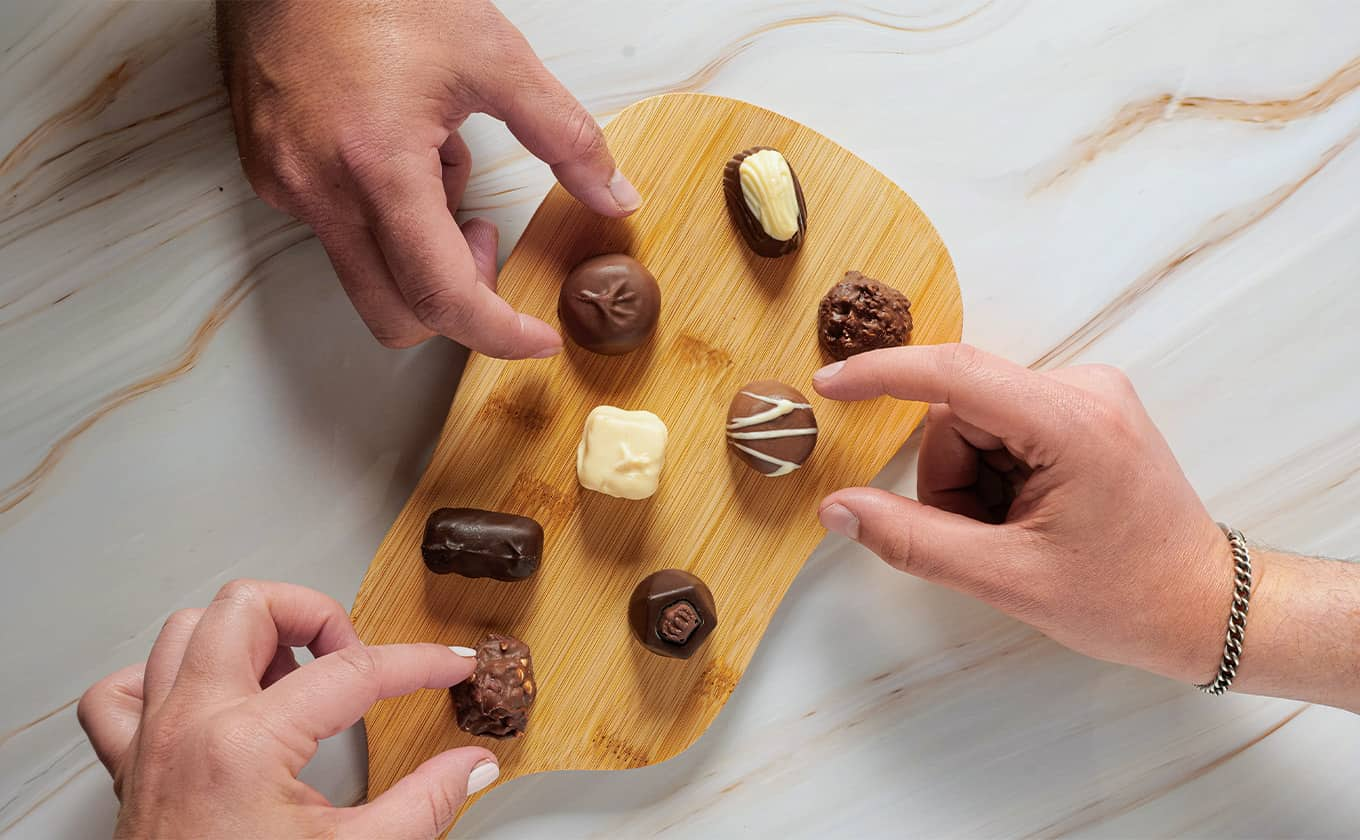
Planning a date night? Gathering friends for a book club, craft night, or easygoing evening hangout? Just looking for a new way to enjoy your favorite treats?
An at-home chocolate tasting is an easy way to turn dessert into an experience, giving everyone a chance to compare flavors, discover unexpected favorites, and enjoy a memorable activity that’s just as much about the conversation as the chocolate itself.
And the best part is that you don’t need sommelier-level knowledge, fancy kitchen tools, or expert tasting skills. Some thoughtfully selected chocolates, a handful of well-paired beverages, and a little curiosity are all it takes to create a memorable chocolate tasting experience at home.
Here’s everything you need to know to host a chocolate tasting that’s fun, approachable, and delicious.
Build a Chocolate Tasting Menu That Tells a Story
The secret to a great at-home chocolate tasting isn’t actually finding the fanciest chocolates. It’s more about taking guests on a memorable flavor journey, moving from lighter, sweeter chocolates to richer or more complex, unique selections.
Think of your tasting lineup the same way you might map out a multi-course meal. Start with approachable favorites before introducing bolder flavors and textures. A creamy milk chocolate, for example, creates a completely different experience than a dark chocolate confection with nuts, sea salt, or caramel.
Include a blend of classic and specialty chocolates to keep guests engaged and spark conversation throughout your time together. Some people may discover they prefer dark chocolate for the first time, while others might be surprised that a chocolate-covered potato chip becomes their favorite bite of the evening.
Make sure you’re shopping for a selection of milk and dark chocolates alongside a few pieces that unwrap something unexpected. Aim to bring some fresh textures and flavor profiles to the table, like these treats from Asher’s:
- Get cozy with summer-inspired flavors of campfire bark
- Add some cookie crumbles to the lineup with moon rocks
- Ease into rich, bite-sized indulgence with fudge bites
- Take inspo from a nostalgic favorite with smores clusters
Add Complementary Foods to Your Tasting Table
Chocolate may be the main attraction, but a few thoughtfully chosen accompaniments can make the evening even more engaging.
Fresh berries, dried fruits, pretzels, nuts, graham crackers, biscotti, and mild cheeses like brie, gouda, or mascarpone all bring something different to the table. A handful of roasted almonds alongside a dark chocolate, for example, can create a completely different bite than enjoying the chocolate on its own.
When browsing the grocery store aisles for ideas, keep the snacks relatively simple. Your goal is to support the chocolates rather than compete with them. A few well-chosen additions can help round out your tasting table and provide palate-cleansing breaks between samples.
Don’t feel pressured to overcomplicate things by designing an elaborate spread or making food from scratch. Store-bought items work perfectly well for a chocolate tasting. The star of the night should be the chocolate, and the ultimate focus should be spending time together. Not stressing over complicated homemade recipes or spending more money to impress as a host.
Pair Your Chocolates with the Perfect Drinks
Some hosts include a beverage station as part of their chocolate tasting setup. But if you don’t have time to figure it all out, just pick up a few drink options to match your chocolates.
If you’re serving wine, a good rule of thumb is to match lighter chocolates with lighter wines and richer chocolates with fuller-bodied wines. Milk chocolate often pairs nicely with rosé, Pinot Noir, or other fruit-forward wines, while dark chocolate can stand up to bolder selections like Cabernet Sauvignon, Merlot, or Zinfandel.
Don’t feel limited to traditional wines, though. Non-alcoholic wines are very popular and can be a great addition to a tasting. Sparkling alcohol-free wines provide a crisp contrast to sweeter chocolates, and non-alcoholic reds can complement cocoa-forward selections surprisingly well.
Coffee and tea are also excellent choices. A medium roast coffee can be a natural companion for milk chocolate. A dark roast often pairs beautifully with darker chocolate varieties. Tea lovers may enjoy serving black tea, Earl Grey, chai, or even herbal options to see how each one interacts with different chocolates.
Then keep a pitcher of water or sparkling water nearby, too. A quick sip between samples can help guests move from one chocolate to the next without lingering flavors carrying over.
Set the Mood, Not Just the Dessert Table
Thoughtful tablescaping can transform a basic dessert setup into an evening that feels intentional, festive, and worthy of the occasion.
Start by choosing a color palette that matches your theme or chocolate selection. Neutral linens, wooden serving boards, ceramic plates, and glass jars create an elegant backdrop that lets the chocolates stand out. For seasonal gatherings, think about incorporating colors and accents that match the time of year, like bold summer hues, warm autumn tones, winter greenery, or pastels and spring florals.
Don’t just plop your chocolates on a plate. Use cake stands, risers, trays, and small bowls to create dimension across the table. Group chocolates with their accompanying snacks, like fruit, nuts, cheeses, or cookies, so sampling the chocolates comes naturally since you’re signaling your recommendations to your guests through placement.
Most people hosting a home chocolate tasting create small labels or tasting cards to make the display feel polished while helping guests identify different chocolates and pairings. Then take it up a notch with a few candles, fresh flowers, string lights, or themed decorations to add some personality to the space.
Guide Guests Through the Chocolate Tasting Process
During a chocolate tasting, the goal is to savor each piece, notice the details that make it unique, and talk about it with your partner, friends, or family members. You shouldn’t be unwrapping a piece of candy and eating it within milliseconds.
Before guests start sampling, encourage them to follow these four simple steps with each chocolate:
1. Look
Take a moment to examine the chocolate before taking a bite. Is it glossy or matte? Smooth or textured? Can you spot ingredients like nuts, pretzels, marshmallow, caramel, or cookie pieces? Visual details can offer clues about what flavors and textures to expect and help you appreciate the craftsmanship of the confection.
2. Smell
Bring the chocolate close and take a quick sniff. Aroma plays a major role in how we experience flavor. Ask yourself: Do you notice hints of vanilla, caramel, roasted nuts, coffee, fruit, or cocoa? You may be surprised by how much you can identify before tasting.
3. Taste Slowly
Rather than chewing right away, let the chocolate melt on your tongue for a few seconds. This allows different flavor notes to emerge gradually. Pay attention to what you taste first and whether the flavor changes as the chocolate melts.
4. Reflect
Before reaching for the next sample, take a moment to think about the experience. Was the chocolate creamy, crunchy, rich, or light? Did it finish sweet, salty, nutty, or cocoa-forward? Most importantly, did you like it and would you choose it again?
Bring People Together, One Chocolate at a Time
As people look for fresh alternatives to traditional dinner parties, restaurant outings, and happy hours, at-home chocolate tastings are only rising in popularity.
A chocolate tasting can fit just about any gathering, from book clubs and neighborhood socials to bridal showers, holiday celebrations, community events, and family get-togethers. With minimal planning and a relatively low cost per guest, it’s a really easy way to add something memorable to the calendar.
Ready to start planning your own event? Shop the Asher’s collection of milk, dark, and specialty chocolates to find the superstars of your tasting lineup.
Frequently Asked Questions
What are the best chocolates for pairing with drinks and snacks?
The best chocolates for pairing are those that offer a mix of flavor profiles and textures, giving you more opportunities to create complementary combos. Creamy milk chocolate pairs well with coffee, rosé, fruit, and salty snacks like pretzels, while dark chocolate is often a natural match for bold red wines, roasted nuts, and espresso. Sweeter chocolate tends to shine alongside sparkling beverages, berries, and citrus-forward flavors. For the most enjoyable tasting experience, include a variety of chocolates, from classic milk and dark chocolate to caramels, nut-filled confections, and specialty flavors, so guests can discover which pairings they enjoy most.
What snack foods pair best with chocolate?
Popular snack pairings include pretzels, roasted almonds, pistachios, popcorn, graham crackers, biscotti, strawberries, raspberries, dried fruits, and even select cheeses. Mild cheeses like brie, gouda, and mascarpone can complement chocolate without overpowering it, creating an experience similar to a dessert charcuterie board. Offer both sweet and savory options to give guests more ways to customize each bite.
How many chocolates should you include in a chocolate tasting?
Five to eight different chocolates is ideal. This provides enough variation for comparison while still letting your guests fully enjoy each sample without feeling overwhelmed or getting too full. If you’re hosting a larger gathering, you can offer a few extra options, but try to keep the tasting lineup focused. Don’t include a bunch of chocolates with very similar flavor profiles. A balanced selection of milk, dark, and specialty chocolates usually creates the most engaging experience.
What is the proper order for tasting chocolate?
Start with lighter chocolates and gradually work toward richer, deeper flavors. Start with milk chocolate, then flavored chocolates, caramel or nut-filled confections, and finally dark chocolate. This progression helps prevent stronger flavors from overpowering more delicate ones. Having water or plain crackers handy in between samples can also help cleanse the palate and make it easier to appreciate the unique qualities of each chocolate. Guests will often notice more subtle flavors when they follow this structured tasting order.